

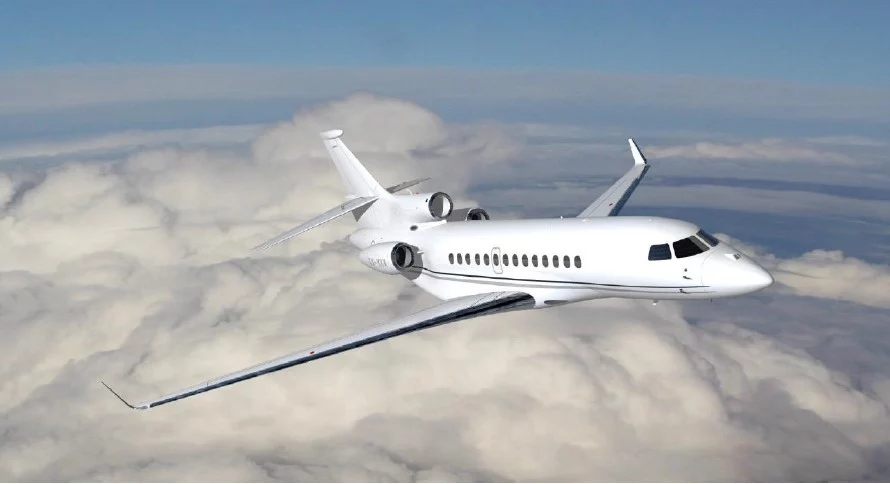
Chartering a private jet in Europe typically costs between €2,000 and €15,000 or more per flight hour, depending on the aircraft category, route, and timing. A short domestic hop in a light jet starts at roughly €4,000 to €6,000 for the full trip, while a transcontinental journey in a large cabin jet can reach €50,000 or beyond. The price range is wide because private jet charter is a highly personalised service: no two quotes are identical. The sections below break down the key pricing factors, aircraft categories, additional fees, and when charter becomes surprisingly affordable.
What factors determine the price of a private jet charter in Europe?
The price of a private jet charter in Europe is determined primarily by aircraft size and type, the distance flown, the number of passengers, and the timing of the booking. Route positioning, airport fees, and seasonal demand also play a significant role. Understanding these variables helps you compare quotes accurately and make informed decisions.
Aircraft type is the single biggest lever. A light jet burns far less fuel and commands lower crew costs than a heavy jet, so the hourly rate reflects that gap directly. Route length matters because longer sectors require more fuel and may involve overnight crew costs. Positioning flights — when an aircraft must fly empty to reach your departure airport — are frequently passed on to the client, either as a visible line item or built into the overall quote.
Timing affects price in two ways. Last-minute bookings can be more expensive when demand is high, but they can also unlock significantly reduced rates when operators have empty legs to fill. Peak travel periods — ski season, major European events, and summer holidays in the Mediterranean — push prices upward as demand outstrips available aircraft. Booking in advance during quieter periods almost always produces a more competitive rate.
Finally, the departure and arrival airports influence the final figure. Handling fees, landing fees, and overnight parking charges vary considerably between a major international hub and a smaller regional airfield. One of the advantages of private aviation is access to a broad fleet capable of reaching smaller airfields that commercial airlines simply cannot serve, which can reduce ground transfer time even if airport fees differ.
YOUR NEXT JOURNEY STARTS HERE
Speak with our team about your private aviation needs.
Which aircraft categories are available for private jet charter in Europe?
Private charter aircraft are grouped into distinct categories based on cabin size, range, and passenger capacity. Each category suits a different type of journey, and knowing the difference helps you choose the right aircraft for your trip — and understand why prices vary so significantly. The main categories used across Europe are turboprop, light jet, super light jet, midsize jet, and heavy jet.
Turboprop
A turboprop is powered by a propeller driven by a jet engine — think of it as a bridge between a small piston aircraft and a full jet. Turboprops are quieter and more economical than jets, and they can land on shorter, unpaved, or grass runways that jets cannot use. This makes them particularly valuable for reaching remote destinations across the Scottish Highlands, the Greek islands, or rural France. A well-known example is the Pilatus PC-12, a single-engine turboprop that seats up to nine passengers and is widely used across Europe for short to medium sectors. Charter rates for turboprops typically start from around €2,000 to €4,000 per sector.
Light jet
A light jet is a small, fully pressurised jet aircraft seating four to seven passengers. It is the most commonly chartered category for business travel within Europe, offering a fast and efficient option for sectors of up to three hours. A typical example is the Embraer Phenom 300, which connects cities such as London and Geneva, or Brussels and Nice, in under two hours. Charter prices for a light jet typically range from €4,000 to €10,000 per sector, depending on the route and positioning.
Super light jet
The super light jet sits between a light jet and a midsize jet. It offers a noticeably more spacious cabin than a standard light jet while remaining cost-efficient for European routes. A good example is the Cessna Citation XLS, which comfortably seats up to eight passengers and is well suited to routes such as Amsterdam to Rome or Paris to Malaga. Super light jets are a popular choice when a group of five or six wants more comfort than a light jet provides, without stepping up to the cost of a full midsize aircraft.
Midsize jet
A midsize jet offers a stand-up cabin in most configurations, greater luggage capacity, and a range that covers most European city pairs non-stop — including longer routes such as London to Moscow or Brussels to Dubai. The Bombardier Challenger 350 is a well-regarded example, seating up to ten passengers in a comfortable club-style layout. Charter rates for midsize jets within Europe typically range from €8,000 to €18,000 per sector.
Heavy jet
A heavy jet — sometimes called a large cabin jet — is designed for long-haul travel and larger groups. These aircraft seat eight to fourteen or more passengers and offer dedicated sleeping areas, conference seating, and full entertainment systems. A flagship example is the Gulfstream G650, capable of flying non-stop from Brussels to New York or beyond. For purely European routes, the cost of a heavy jet is rarely justified by distance alone, but when ten or more passengers are travelling together, or when the journey continues beyond Europe, the economics shift in favour of a larger aircraft. Charter rates start from around €15,000 and can exceed €50,000 for longer European or intercontinental sectors.
How much does chartering a light jet in Europe typically cost?
Chartering a light jet in Europe typically costs between €4,000 and €10,000 for a short to medium sector, such as London to Paris, Amsterdam to Geneva, or Brussels to Nice. These aircraft seat four to seven passengers and are well suited to flights of up to three hours, making them the most commonly chartered category for business travel within Europe.
Light jets offer an excellent balance of efficiency and comfort for smaller groups. Cabin space is more compact than in larger categories, but for a one to three-hour sector the trade-off is entirely reasonable. They can also access a wider range of airports, including many regional fields that larger jets cannot use — a practical advantage when your destination is not served by a major hub. Flying into Cannes Mandelieu instead of Nice, or Innsbruck instead of Munich, can save an hour or more in ground transfers.
For very short sectors — city pairs under an hour apart — the total charter cost can fall below €4,000 if positioning is minimal and conditions are favourable. On the other hand, a light jet routing across multiple stops in a single day will attract additional fees for each leg, so the cumulative cost for a multi-stop itinerary rises accordingly.
What is the difference between chartering a midsize and a heavy jet?
A midsize jet offers a larger cabin, greater range, and more luggage capacity than a light jet, with charter prices typically ranging from €8,000 to €18,000 per sector within Europe. A heavy or large cabin jet — capable of transatlantic range and seating eight to fourteen or more passengers — commands rates from €15,000 to €50,000 or beyond for European routes, depending on distance and specification.
The practical difference comes down to mission requirements. Midsize jets such as the Bombardier Challenger 350 comfortably seat six to ten passengers, allow stand-up cabin height in most configurations, and can fly non-stop from London to Moscow or Paris to Dubai without difficulty. They are the preferred choice for groups of four to eight who want meaningful comfort on a two to four-hour sector.
Heavy jets such as the Gulfstream G650 or Bombardier Global 6000 are chosen when the passenger count is larger, the journey is genuinely long-haul, or the client requires a full cabin experience with dedicated sleeping areas, conference seating, or entertainment systems. For a European sector, the cost of a heavy jet is rarely justified purely by the distance, but when a group of ten or twelve is travelling together, or when the flight continues beyond Europe, the economics shift in favour of a larger aircraft.
Operators like FLYINGGROUP offer charter solutions across all categories, matching the aircraft to the specific mission rather than defaulting to a single type.
Are there extra fees when chartering a private jet in Europe?
Yes, private jet charter quotes in Europe frequently carry additional fees beyond the base aircraft rate. The most common surcharges include airport landing and handling fees, fuel surcharges, crew overnight costs, de-icing charges in winter, and catering. Depending on the operator and the route, these extras can add ten to twenty-five percent to the headline price.
Here is what to look for when reviewing a charter quote:
- Positioning fees: If the aircraft needs to fly empty to your departure airport, this cost is often passed on either explicitly or embedded in the quote.
- Landing and handling fees: These vary significantly by airport and can be substantial at busy international hubs.
- Crew overnight charges: For early morning departures or late arrivals, crew accommodation costs may apply.
- Catering: Basic refreshments are usually included, but bespoke catering requests carry additional charges.
- De-icing: A seasonal cost in northern Europe during winter months, billed at cost. De-icing is the process of removing ice or frost from the aircraft’s surfaces before departure to ensure safe flight.
- International fees: Overflight permits — official authorisations required to fly through certain countries’ airspace — and international handling charges apply on certain routes.
A reputable operator will present a transparent, all-in quote that itemises these costs clearly. If a quote looks unusually low, it is worth asking whether positioning, handling, and crew costs are included before comparing it against other offers.
YOUR NEXT JOURNEY STARTS HERE
Speak with our team about your private aviation needs.
When is chartering a private jet cheaper than expected?
Chartering a private jet in Europe can be significantly cheaper than the standard rate when you book an empty leg flight, travel outside peak seasons, or fly a route that aligns with an aircraft’s existing positioning. Empty legs — return sectors flown without a paying passenger — are sometimes available at discounts of forty to sixty percent off the standard charter rate.
Empty legs arise when an aircraft is booked for a one-way journey and the operator needs to reposition it for the next charter. Because the flight is happening regardless, operators price these sectors attractively to offset costs. The trade-off is flexibility: empty legs are fixed in terms of route, date, and timing, and they can be cancelled or rescheduled if the original booking changes. For example, if a Phenom 300 is booked to fly a client from London to Cannes, the return sector to London may be available as an empty leg at a heavily reduced rate.
Beyond empty legs, a few other scenarios reduce the effective cost of private jet charter:
- Group travel: When the per-seat cost of a charter is divided among six or eight passengers, it can compare favourably to business class fares on the same route — with the added benefit of flexible departure times and access to smaller airports closer to your final destination.
- Off-peak timing: Mid-week departures and travel outside school holidays and major events attract lower demand and more competitive rates.
- Flexible routing: Departing from an airport where an aircraft is already based eliminates positioning fees entirely and can meaningfully reduce the total cost of the charter.
Should I charter a private jet or join a jet card programme in Europe?
If you fly privately more than fifteen to twenty hours per year in Europe, a jet card programme typically offers better value and more predictable costs than booking individual charters each time. For occasional flyers — fewer than ten hours annually — on-demand charter is usually the more flexible and cost-efficient choice, with no upfront commitment required.
The core trade-off is predictability versus flexibility. On-demand charter lets you choose the aircraft for each flight based on the specific mission, with no pre-purchased hours to manage. A jet card programme, by contrast, locks in a rate per hour and guarantees availability, which is valuable for frequent travellers whose schedules shift at short notice.
FLYINGGROUP’s FlyingCard membership starts at 25 flight hours per year and is designed precisely for clients who fly regularly but want to avoid the capital commitment and operational complexity of aircraft ownership. It combines pre-reserved hours with full flexibility, meaning members are not tied to a fixed schedule or a single aircraft type. For those exploring the right structure, the full range of aviation services — from single charters to membership programmes and shared ownership — is worth reviewing in the context of your typical travel patterns.
The honest answer is that the right choice depends on your annual flying hours, the predictability of your routes, and how much you value rate certainty versus aircraft choice. A conversation with an experienced charter team will clarify which model fits your situation, and operators who have been doing this since 1995 can advise on that distinction without any pressure to commit. Reach out to FLYINGGROUP to discuss your requirements directly.